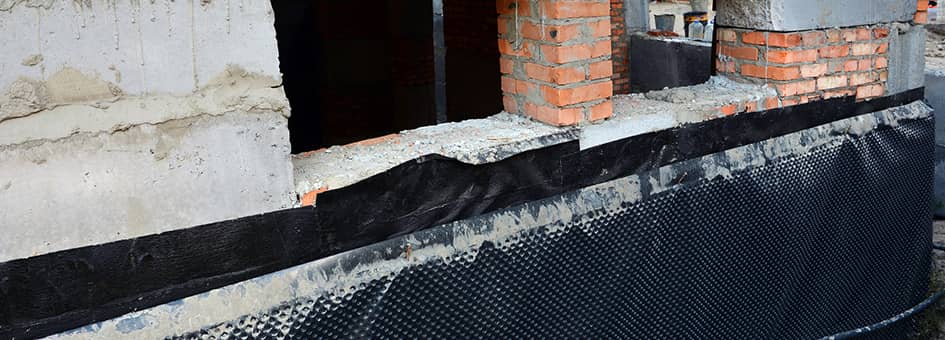
Waterproofing Your New Home Is Critical
The exterior foundation is a critical part of your new home. A well-designed foundation supports the house and directs water away from the structure. Moisture management starts with the construction of the foundation itself. The building code for new residential requires minimal preparation for the building’s foundation. Commonly referred to as “damp-proofing”.
The Difference Between Damp Proofing and Waterproofing
The preparation of the foundation during its construction is critical. Damp proofing is a moisture-resistant coating that is applied to the exterior foundation wall to minimize moisture migration from the ground through the foundation wall, especially into basements. A liberal amount of damp proofing material is applied above and below grade. This damp proofing material is designed to keep out soil moisture but is not sufficient for protecting your home from liquid water.
Exterior Waterproofing will protect your home from foundation leaks that can happen as a result of hydrostatic pressure. Your foundation is poured concrete, and concrete is a porous material that is susceptible to moisture. Without proper protection, your foundation is exposed to soil moisture, hydrostatic pressure, and soil gasses. As moisture gathers around the foundation of your new home, hydrostatic pressure forces water through the porous concrete, causing cracks in the foundation and water in your basement.
The Waterproofing Process For Your New Home
- The rubber membrane is applied to the exterior wall
- Fabric mesh is embedded into the first coat of rubber membrane
- An additional coat of rubber membrane applied over the mesh
- For drainage, RCC adds a soil side drainage system which is fastened to the foundation wall with the raised dimples placed away from the wall
Waterproofing During The Construction Stage Can Save You Thousands!
If you are pre-emptive and decide to hire a waterproofer to work on your new home’s exterior foundation during the building stage, you could save yourself tens of thousands down the road. The cost to waterproofing a new home will be minimal compared to the cost of excavating and repairing a damaged foundation, not to mention the inconvenience it will cause to you, especially if water damage happens after the basement is finished.
4 warning signs of a crack in the foundation
Foundation cracks form as your home naturally settles over time. Although this is normal, there are four causes for concern as they could be a sign of something more serious:
- Cracks on walls, over doorways, windows, or ceiling corners
- Door(s) start to jam or not latch
- Cracks in vinyl or ceramic tile over a concrete floor
- Window(s) becomes harder to open and close or won’t close completely
Fixing structural foundation problems can be problematic and costly. A structural crack is where the foundation wall feels uneven or the width of the crack is about ¼” or wider. Some structural foundation cracks will require engineer specifications in order to repair. The obvious thing to look for is a major crack on the foundation wall. A horizontal crack means that there is a problem. Though all cracks on the basement wall are generally bad, horizontal cracks are serious. Horizontal cracks occur with the soil [mainly clay] constantly expanding and contracting to put the basement wall under a lot of pressure. Some walls especially block foundation walls tend to bow.
Not all foundation cracks are serious. Some small hairline cracks can occur on drywalls, ceilings, or foundation walls due to minor settlement of the home or seasonal expansion and contraction. If leaking occurs then there is a problem and should be looked at. Newly poured concrete tends to crack as concrete shrinks during the curing process. These cracks are usually surface cracks and those foundation cracks may not go through the entire width of the wall. Majority of common foundation cracks occur around basement windows and doors as it’s a “void” in the foundation wall.
Our experienced technicians are familiar with the best practices of waterproofing your basement to stand the test of time. Once the foundation cracks have been resolved, consider exterior waterproofing as your permanent solution in preventing a wet basement.
Contact us to book an appointment or call us anytime for an emergency.
Call Us Now
Your Local Specialists